They Don't Age, They Don't Sleep, and They Don't Need a Ticket: AI Influencers Were Everywhere at Coachella Without Ever Setting Foot in the Desert
Every April, Coachella becomes one of the biggest moments in influencer marketing. Brands build entire campaign strategies around it. Creators fly in on contracts. Teams exist specifically to make sure a product appears in the right Instagram frame, at that right golden Californian hour, next to the right face. The machine is expensive, coordinated, and relentless.
It’s all about being there, being seen, and making sure deliverables are met. This year, however, some of the most viral content came from creators who were never there.
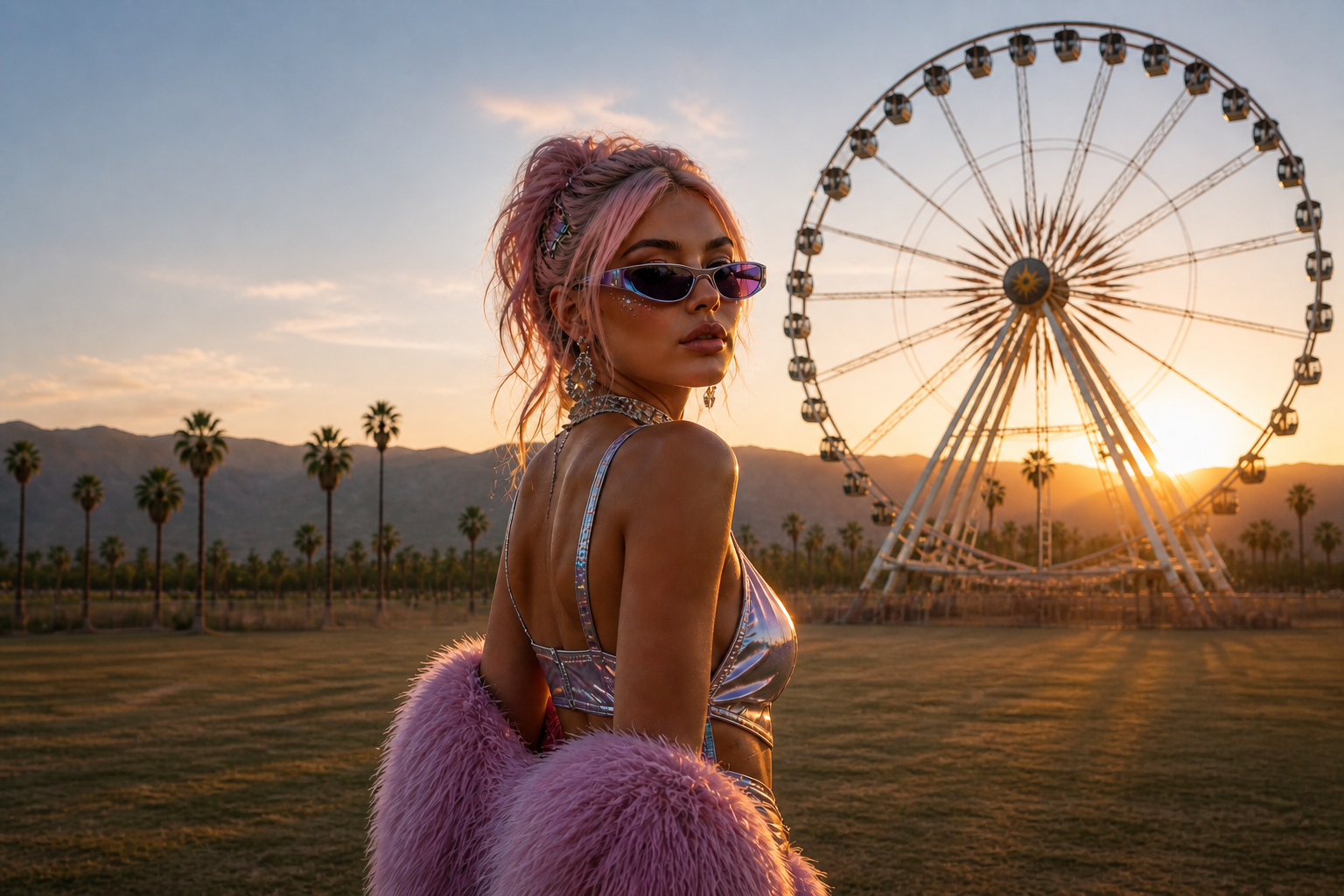
AI-generated influencers, some with millions of followers, posted festival content from stages they never visited, in outfits that were never worn, alongside celebrities who never posed with them. No ticket or SPF needed. Just generated images flooding the same feeds as everyone else, posted without disclosure or with labels so buried they may as well not exist.
Coachella just proved that content wins, regardless of who creates it. Does this mean that the next generation of influencers may not need a passport, a personality, or even a pulse?
How Coachella Became a Full-Scale Marketing Ecosystem?
Coachella started as a music festival, and for its first decade, that was mostly true. Over the years, it has transformed into something much bigger.
First came celebrities. The bohemian aesthetic and the flower crowns took over, while brands found their way in through proximity. Whatever commercial arrangements existed, they were loose and largely unmeasured. Nobody was calling it a strategy.
Pop-ups, sponsored parties, and brand deals followed. Coachella stopped being a venue that brands attended and became a platform brands deployed. Creators were invited, compensated, and contracted.
Today, Coachella sits at the peak of the influencer marketing calendar. It functions as a temporary marketplace where creators produce assets, and brands compete for visibility. Every phase of that shift has changed who shows up and why.
Faking attendance is not new to any of this. In 2023, TikToker Loren Gray went viral explaining that many influencers who appear to be there never enter the festival at all. They drive to the desert, and stay in nearby hotels and Airbnbs to shoot “festival content” without a wristband. In her words, "If you feel bored or sad because you're not at Coachella, just know that most of these people aren't either.” AI creators are the latest version of that same logic, minus the drive.
Which AI Influencers Were "at" Coachella — and What Did They Post?
AI accounts, including Granny Spills (2M followers), Lil Miquela (2.3M) and Fit_aitana (392K) posted Coachella 2026 festival content with minimal or no disclosure on individual posts.
Granny Spills, an AI-generated account with 2 million followers posted images where she was alongside Justin and Hailey Bieber, Kylie and Kendall Jenner, Sabrina Carpenter, and Madonna at the festival. The account is cross-tagged to Blur Studios on one post. Every other Coachella post carried no label.
Lil Miquela, with over 2.3 million followers and prior brand deals with Prada and Calvin Klein, posted a festival photo next to the iconic Ferris wheel.
Then there's Fit_aitana. Her Instagram bio describes her as a "virtual soul." On her individual posts, that disclosure disappears entirely.
The comments across all three accounts follow the same pattern: "Is this real? I genuinely cannot tell." "Most people have no idea this is AI."
These are not niche accounts. Together, they reach more people than many mid-tier human creators running full-brand campaigns. The barrier to creating AI influencer content has collapsed. Tools like Predis.ai now generate a complete Instagram post from a single prompt. Meta has begun rolling out its AI avatar creation tools. The infrastructure for producing synthetic creator content at scale is no longer in beta.
Why are AI Influencers Pretending to be at Coachella?
AI influencers piggyback on Coachella for the same reason as human influencers: the content earns algorithmic reach, which grows followers, which builds commercial value.
The mechanism is identical. Brands reportedly spend into the high six figures to send real human creators to Coachella. An AI account replicates the content with none of those logistics.
Why Does Influencer Marketing Actually Work? The Mechanism Matters Here.
Influencer marketing relies on parasocial bonds: the audience feels they know the creator personally, even though the relationship flows only one way. Repeated exposure, perceived vulnerability, shared moments over time. That belief is doing all the commercial work.
Followers do not trust creators because they post frequently. They trust them because they have watched them over time: their routines, their opinions, the moments where they made a mistake and owned it. "I know how this person thinks" is what turns a scroll into a purchase decision. That trust is built on the belief that the creator has genuine stakes: real consequences, real experiences, real skin in the game.
An AI persona can simulate the format of that relationship. It cannot produce the history that makes it credible. The numbers reflect that. Human influencers generate approximately 2.7 times more engagement than AI counterparts, and the commercial gap is far wider: human creators earned an average of $78.77 per sponsored campaign compared to $1.69 for AI personas, according to 2025 Financial Times data.
What Is the Brand Risk When Working with AI Influencers?
When audiences discover they engaged with a fabricated presence, reputational damage transfers upstream from the AI account to the brand. The complaint becomes "This brand used a fake person to sell me something."
Influencer marketing is a trust business. The moment an audience feels deceived, that frustration does not stay with the AI account. It travels to whoever placed the product there. The transfer is fast and tends to be disproportionate to the original offense.
The regulatory environment makes this risk more concrete. The FTC has issued updated guidelines requiring dual disclosures when content is both AI-generated and sponsored. The EU AI Act requires AI-generated outputs, including images and videos, to be labeled in a machine-readable format and to be identifiable as artificially created. German regulations require content modified by AI tools to carry explicit labels such as “edited image” or "virtual image." The Digital Services Act (DSA) backs all of this up with fines reaching up to 6% of global annual turnover for non-compliance. Across every major market, the regulatory direction is toward stricter transparency requirements, not looser ones.
Do AI Influencers Outperform Human Creators on Return?
The global market for virtual influencers is expected to grow from $6.06 billion in 2024 to $45.88 billion by 2030, a compound annual growth rate of 40.8%, according to Grand View Research. That number will appear in marketing meetings this year with the same question attached: Does this mean the next generation of influencers will be generated rather than born?
Before challenging the logic, it is worth being honest about why AI influencers are appealing in the first place. An AI persona is available around the clock, never ages, never gets sick, and never has a bad quarter. No usage rights negotiations, no “I no longer feel comfortable with this brand” moments. No scandals, no unpredictable statements, and content delivered at scale across every language and market simultaneously. For brands, this can sound very tempting.
But what a human creator is worth to a brand is not the content they post today. It is years of showing up, holding opinions, being publicly wrong sometimes, and living through change with an audience watching. That track record is what converts a follower into someone who trusts a recommendation.
Vodafone Germany ran a TikTok campaign for high-speed internet using an AI influencer. The three videos generated over 2 million views. Viewers noticed the avatar's inconsistent facial expressions. The campaign produced awareness. It did not build the kind of trust that converts a viewer into a subscriber over time. That distinction matters, and it tends to get lost in headline growth figures.
Cost efficiency is where AI holds a genuine structural edge. A human creator with a million followers can command ten thousand euros or more per campaign. AI content production costs a fraction of that. The productive question for any brand is this: how much trust are you willing to sacrifice for a lower production cost?
Where the Industry is Heading
Around 79% of marketers are increasing investment in AI-generated creator content, but those investments are mostly focused on enhancing existing campaigns rather than replacing human creators.
The more interesting strategic territory is what happens when humans and AI are combined with intent. Digital twins, where a human creator licenses an AI version of their voice, appearance, and tone, are already in use. A digital twin can operate across languages, platforms, and time zones while the human counterpart remains the source of trust and the relationship. Done well and with proper licensing, this scales a creator's commercial footprint without diluting what makes them valuable. Done poorly, it is undisclosed AI with extra steps, and the brand risk is identical.
Established creators are also integrating AI tools into routine, low-value tasks: caption writing, initial ideation, video transcription, and posting schedule optimization. This is a step toward the professionalization of the creator industry. The tools that once required a production team are becoming part of a solo creator's standard workflow. Brands that support this build stronger relationships with creators.
The Bigger Picture
AI influencers are in the market. They were at Coachella this year without a ticket, a hotel room, or a face that ages. They will be at the next one, and they will be better at it. What they will not do is replace human creators.
They will do something more useful: raise the bar for what human creators are actually worth.
What I keep coming back to is this: a track record cannot be generated. Neither can a relationship or the credibility that builds over years of showing up.
Instead of asking whether to use AI, the work is knowing where it belongs inside a business built on trust, and where it does not. AI handles efficiency. Humans hold the relationship.
The creators who convert are not interchangeable with the ones who generate impressions. That distinction has always determined commercial outcomes. It determines them more now than ever before.