Instagram Affiliate Links in Reels: Better Late Than Never
Affiliate marketing on Instagram has always required duct tape and wishful thinking. Creators would film content, post it, and refer viewers to a link in bio, hoping they'd follow the breadcrumbs. Few did. Even when the intent to buy was there, the friction killed it. Most people won’t stop mid-scroll, leave the app, and go through a five-tap obstacle course to complete a purchase.
Instagram affiliate links in Reels change that.
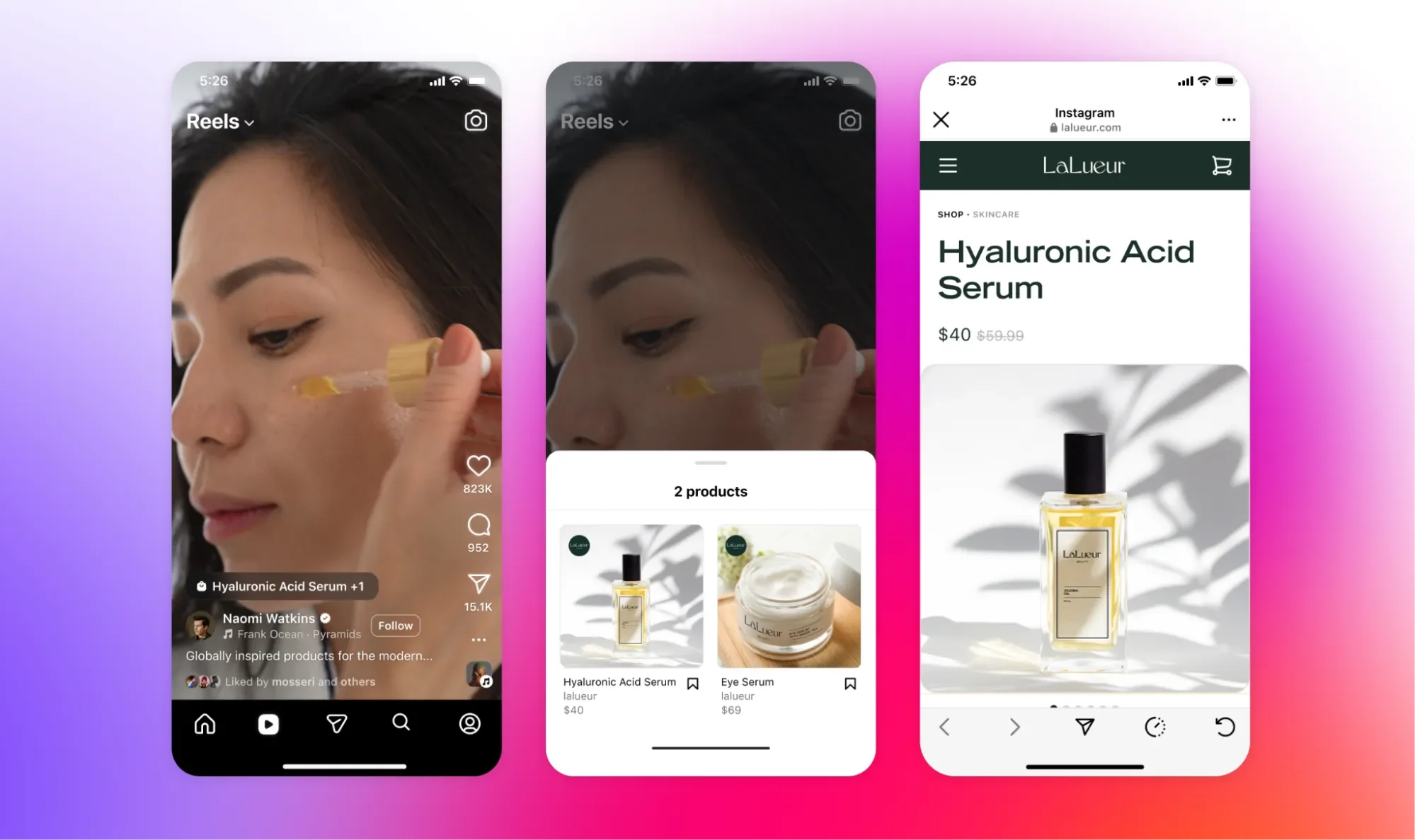
According to Adam Mosseri, head of Instagram, creators can now tag affiliate products directly inside Reels. A viewer taps a floating product bubble, lands on the brand's site or app, and buys. The creator earns a commission. The link lives within the content that generated the interest, not three taps away.
For anyone who has spent time building influencer marketing programs, this is not a surprise. It's a relief. The surprise is how long it took Instagram to do this.
What has Instagram Confirmed?
Creators can tag up to 30 individual products inside a single Reel using the new “Add Product” option, which appears in the share sheet. From there, they can either paste a product URL or search and tag a product from a brand's verified Meta commerce catalog. Catalog verification is a prerequisite: each tagged product must exist as an individual line item with accurate pricing and availability; otherwise, it cannot be tagged. There is no workaround.
The feature is currently rolling out in five markets: the US, Brazil, India, Indonesia, and Thailand, with planned expansion across all 22 Instagram commerce markets in the following weeks. Amazon and Shopee (the leading e-commerce online shopping platform in Southeast Asia and Taiwan) are launching as directly integrated affiliate partners, with additional tools confirmed to follow.
What’s also worth noting is that tagged content surfaces in the Partnership Ads Hub, making it visible to brands.
Why Reels Had no Choice But Be an Awareness Format in the Past
Reels have always delivered reach but stopped at awareness because the platform provided no native way that could close the gap between interest and purchase.
Until now, getting someone from a Reel to a product usually meant: see the content, tap the profile, find the bio link or go to a Linktree with a bunch of other links, navigate to the page, and find the product. Each step is friction, and friction doesn't just slow conversion down. It kills it. Most viewers never made it to the end of that chain. And that wasn't a creator performance problem.
Brands also treated it as an awareness format because they had no other choice. They measured success with views and impressions. Not because they mattered most, but because this was what the platform made measurable. The reporting shaped the strategy when it should have been the other way around.
A product tag inside a Reel removes that constraint. The creator's recommendation and the purchase path now exist in the same place and at the same time, allowing Reels to function as a direct conversion asset. This corrects a structural flaw in how Instagram affiliate marketing was always supposed to work.
How Does Instagram's Affiliate Model Differ From TikTok Shop?
The comparison is inevitable. But Instagram takes a different route here.
Instagram affiliate links send buyers to the brand's own site; TikTok Shop completes the transaction inside the app. They also create a different relationship between the brand and the customer.
TikTok Shop is a closed system. Products are listed in TikTok's marketplace, the transaction completes inside the app, and the customer never leaves. That removes purchase friction, which is valuable. The trade-off: the brand's relationship with that customer runs through TikTok's infrastructure. First-party data, repeat-purchase cycles, and direct customer communications all reside within a system the brand does not own.
With Instagram's model, the viewer taps the product tag, lands on the brand's site, and completes the purchase there. The commerce layer stays on the brand's own infrastructure. That matters for brands that care about what happens after the first sale. Instagram's approach leaves more in the brand's hands.
What This Means for Creators and Brands
For creators, this is the workflow fix that Linktree and Beacons were built as workarounds for. The redirect chain is gone. Fewer steps between interest and checkout means fewer places for purchase intent to go cold. The product appears within native, useful content, making it less intrusive than a traditional ad and more likely to convert.
The risk is obvious: the same feature that makes monetization easier also makes over-monetization easier. A creator who tags products in every Reel because the option exists will erode the trust that made their recommendations worth anything in the first place. Audiences notice when content becomes a catalog. When that happens, conversion rates drop at the brand level, not just the creator level.
Not Everyone Is Going in the Same Direction
While Instagram embraces affiliate marketing, Target is walking the other way.
Target is replacing its commission-based Creator Program with Club Target: a points-and-rewards system built around guided challenges, redeemable for gift cards and brand perks rather than commissions.
This is a part of a broader shift among retailers who are replacing traditional affiliate structures with gamified programs as they look to scale creator marketing at lower payout costs. Whether that trade-off holds over time, lower cost per creator but potentially lower creator commitment, is a bet that the data will eventually settle.
What that signals, above all, is that creator commerce has no single agreed direction yet.
What Do Brands Need to Do Next?
One thing is for sure: Reels can no longer be treated as an awareness format with nice engagement numbers attached.
That changes how you brief creators, how you structure commission agreements, and how you report results internally. A Reel that drives 200 tagged-product purchases is a conversion asset. It should be evaluated, optimized, and scaled accordingly. For brands that have been defending influencer budgets with reach metrics and screenshots, this is the infrastructure shift that makes the commercial argument to finance and leadership is considerably cleaner: the attribution is more direct, and purchase data is a language those conversations already speak.
The setup work is unglamorous: verifying Meta commerce catalogs, briefing creators on product tagging, updating commission structures, and aligning affiliate tracking with existing reporting infrastructure. None of it is interesting. All of it determines whether you're positioned to benefit from this feature or still doing the groundwork six months from now in a room that's considerably more crowded.
-
No. If a product isn't listed in a brand's verified Meta commerce catalog, it can't be tagged inside a Reel.
-
The bio link model required a viewer to remember a product after watching, navigate away from the content, find the right link, and then convert on a separate page. Most didn't make it through all four steps. Affiliate tagging in Reels collapses that journey: the product tag sits inside the content at the moment of peak interest. Fewer steps mean fewer drop-off points
-
Not yet. The feature is currently rolling out in the US, Brazil, India, Indonesia, and Thailand, and is coming soon to all 22 Instagram commerce markets.
-
Over-tagging. The feature makes it easy to attach affiliate links to every piece of content, but audiences notice when recommendations start feeling like a product catalog. When trust erodes, conversion rates follow. The creators who will benefit most are those who tag selectively, only when the product genuinely belongs in the content, rather than because the option is available.