Creators are making it into the Hall of Fame at IMDb
IMDb (Internet Movie Database) is where you go when you can't remember which movie you know that actor from, or to confirm whether that comedy everyone hated is actually as bad as they said before you waste two hours finding out. Turns out, creators have a place there now, too.
Last month, IMDb officially stepped into the creator economy by adding a new professional category called "Digital Creator” with 6 sub-professions: Streamer, Vlogger, Video Essayist, Video Creator, Gaming Creator, and Influencer. Is Hollywood getting some competition? Maybe. Told you creator marketing was going places.
What’s behind the IMDb update?
The new category gives digital creators a dedicated way to represent the “full scope of their work in one place, making them discoverable to audiences, industry peers and potential employers,” according to IMDb.
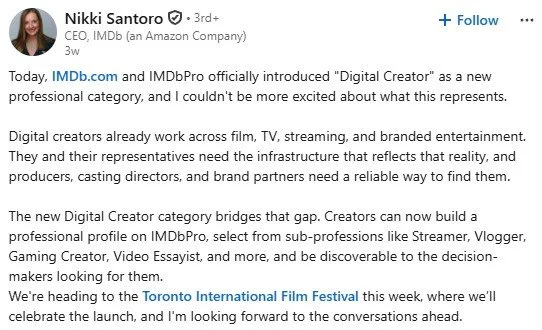
Nikki Santoro, IMDb’s chief executive, says the move reflects something that’s already happening across the entertainment industry:
“Digital creators already work across film, TV, streaming, and branded entertainment. They and their representatives need the infrastructure that reflects that reality, and producers, casting directors, and brand partners need a reliable way to find them. “
Creators with film, TV or streaming credits, like MrBeast (Jimmy Donaldson), already had a place on the platform. What is new is that creators can build a professional profile without a single traditional film or TV credit and list it next to roles like actor or producer. The new profiles are available to IMDbPro Premium members, which makes creators a new group of paying customers for IMDb, too.
IMDb marked the launch with an invite-only industry party at the Toronto International Film Festival (TIFF). Plenty of people will shrug this off as a small update and say: they got a category, big whoop.
Honestly, I'd give it more credit than that. A database built on film and TV credits has made room for careers that were built without them, which says a lot about where creators now stand in the entertainment industry. IMDb is simply catching up to something the industry has already been funding.
How are creators moving into film, TV and streaming?
Creators have been working their way into film, TV and streaming for years. What's different in 2026 is that the industry now puts real money behind it: agencies fund original shows, platforms open new doors for creator-led entertainment, and streamers put creator-made shows on their services.
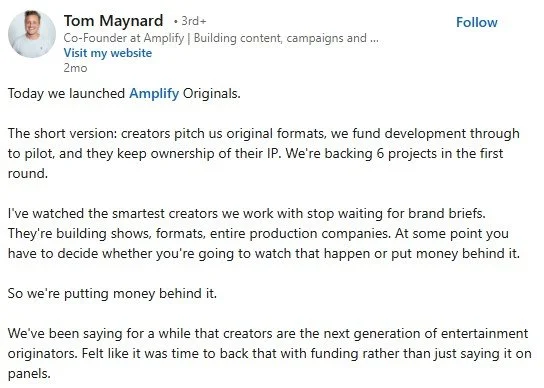
On September 14, TikTok and the Australian creator agency Amplify launched The Next Episode in Australia and New Zealand. The program helps brands develop and fund creator-led series on TikTok, in formats that include micro-dramas, interviews, game shows, docuseries and reality shows. Brands can integrate into a creator's existing series or develop their own, and eligible brands can also get production support from TikTok. In July, the same agency had already launched Amplify Originals, a program that funds creators to develop pilots for original shows while the creators keep ownership of their IP. Amplify’s co-founder, Tom Maynard, called creators “the next generation of entertainment originators” and said it felt like time to back that with funding rather than just saying it on panels.
In August, Disney and TikTok announced a global partnership that lets creators build content from scenes across Disney, Pixar, Marvel, Star Wars and FX, with selected fan videos appearing on Disney+.
The announcement also included a number that caught my eye. In an Ipsos survey for TikTok across 7 markets, including Germany and the UK, nearly half of the viewers surveyed said entertainment content they found on TikTok led them to watch a film or series on a streaming service or TV. That makes the feed a discovery channel for streaming services.
Mark Rober, a former NASA engineer turned YouTube creator, already has a science series on Netflix. His company CrunchLabs is producing his upcoming Netflix competition show, SCHOOLED!, together with Jimmy Kimmel's production company. Netflix is also developing a scripted series with Alan Chikin Chow, creator of the scripted YouTube series Alan's Universe, which has helped him build an audience of more than 100 million subscribers.
Netflix has struck more than 20 deals with major YouTube creators in the past 2 years, according to TheWrap. YouTube has also reportedly offered some of its biggest creators millions of dollars to keep their content exclusive to YouTube for a set period.
Should I keep going, or is it clear by now why the IMDb update comes as no surprise? The line between traditional entertainment and creator-led media keeps getting harder to draw.
From promoting brands, to becoming a brand
Some creators are moving into the entertainment industry while others are taking a different route and building consumer brands of their own.
CreatorIQ's 2026 State of Creators report, a survey of 5,095 creators across 100 regions, found that 50% have launched or plan to launch their own brand. The same report found that 67% earn less than $10,000 a year from content, and 62% say content isn't their main income.
For many creators, sponsored posts alone don't pay the bills. Building a business beyond content is a logical next step, and it gives them another way to earn from the audience and credibility they've built over time.
One of the latest examples is Kai Cenat, the American streamer and YouTuber's fashion label VIVET made its runway debut at New York Fashion Week in September, and 180,000 people livestreamed the show. His career started online, and his fashion business has reached one of the industry's biggest traditional stages.
Fashion is one route among several and plenty of creators produce shows or develop products under their own name. The creator can be the person promoting a company's business, the person building their own, or both.
The creator economy has outgrown the feed
Five years ago, a creator's job was easy to picture: perhaps 3 Instagram posts, 2 TikToks, a few Stories, campaign done. There's nothing wrong with that, and if a brand needs 3 TikToks, a creator can make 3 TikToks.
One creator's career can now include content for their own channels, a brand campaign, an industry event, a product in development and a show in production. The content that goes out on their social channels is only one part of the job. Plenty of creators are now founders, hosts, producers and designers, sometimes several of these at once.
That expansion also changes how creators fit into a campaign. In a standard setup, the creator comes in at a fixed point: the brand has a product and a marketing plan (if they're doing things properly), and the creator is hired to make a post and bring reach, credibility or both. One creator can now sit on both sides of that arrangement, promoting one brand while launching their own, or appearing in a show while producing one.
Sponsored posts still have their place. "Creator" now covers a range of careers, and the person delivering UGC for your anti-aging serum is only one of them.
And this is where the term "influencer marketing" starts to get a little narrow. It can still mean a single sponsored post, and it can also mean a long-term partnership, creator-led content production, a product collaboration or a creator joining a larger entertainment project. Those relationships have different goals and involve creators in different ways.
Which brings me back to IMDb. Adding "Digital Creator" next to roles like actor and producer reflects how far the creator's professional world has expanded. Giving creators a place in the same professional database as the entertainment roles they increasingly overlap with makes sense, even if some people roll their eyes and disagree. Creators are no longer confined to one role, one industry or one type of commercial relationship, and "2 Instagram posts and 1 story" describes only a sliver of what creators do.
What IMDb Is Really Recognizing
Creators already work across entertainment, fashion, retail and advertising, and IMDb adding "Digital Creator" next to traditional entertainment professions is another sign that the industry is adjusting to that reality.
It's too early to say whether an IMDb profile turns into more work for creators. For the ones at the top, the calendar is already crowded.
The creator economy has grown well past content alone, and the creators have grown with it.
If you want to see where your creator program stands, the Influencer Marketing Health Check is where we start.
Let's influence.
Frequently Asked Questions
-
IMDb now lets creators list themselves under a Digital Creator profession. It has six sub-professions: Streamer, Vlogger, Video Essayist, Video Creator, Gaming Creator and Influencer.
-
No. Creators who work in film, TV or streaming, like MrBeast, already had a place on the platform, and what's new is that creators can build a professional profile without a single traditional credit. The new profiles are available to IMDbPro Premium members.
-
They already are. Creators have worked in film, TV and streaming for years. What's new is the money behind it: agencies, platforms and streaming services are now funding and developing shows and formats built around creators.
-
Most still rely on social platforms, but plenty now do more than post. Some produce shows, start businesses, develop products, appear in entertainment projects or sign long-term brand deals.
-
In CreatorIQ's 2026 State of Creators report, 50% of the 5,095 creators surveyed have launched or plan to launch their own brand. The same report found that 67% earn less than $10,000 a year from content, and 62% say content isn't their main income.